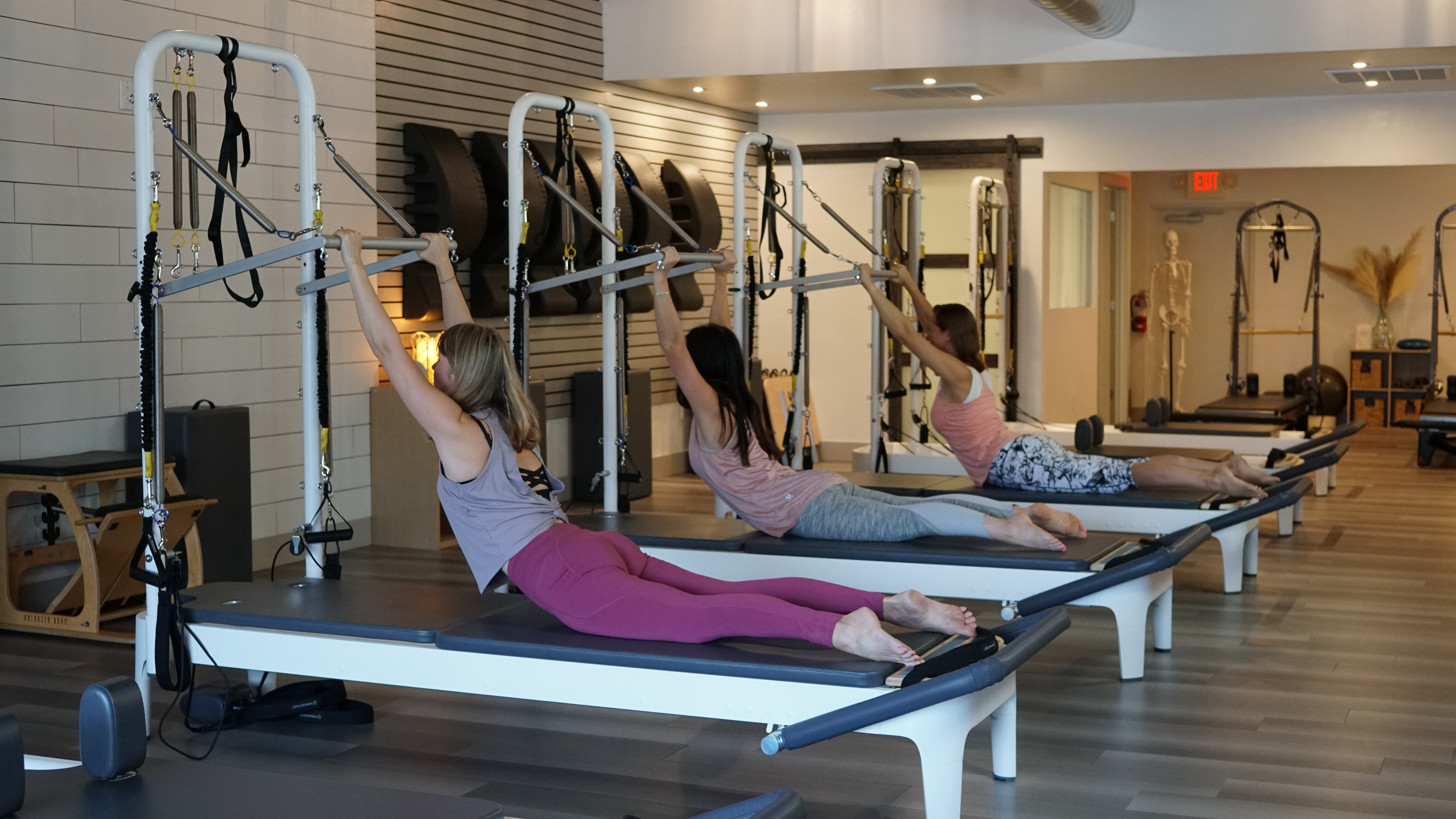
Reformer Pilates is not just exercise, it’s a total body transformation on a machine that moves with you. These classes are designed to build strength and stability through controlled, equipment-based movement.
Strength and stability play a major role in your body’s efficiency, injury prevention, physical confidence, and pain reduction. Reformer Pilates training helps build strength in a way that also supports alignment and control.
This blog will help you understand how Reformer Pilates classes support both your strength and stability. And why you need guided instructions to perform effectively.
What Reformer Pilates Classes Focus On
Reformer Pilates classes are structured around quality of movement rather than speed or repetition. Each session emphasizes:
- Reformer Pilates classes focus on slow, controlled movements instead of rushing or using momentum.
- Instructors guide you to maintain proper alignment so your joints stay supported and your muscles work evenly.
- Breathing is coordinated with each movement to help you stay focused and keep your core engaged.
- Each exercise is performed with attention to detail so the right muscles are doing the work.
- Instructors offer regular feedback and gentle corrections to help you move safely and effectively.
- The exercises are designed to strengthen the body evenly, helping reduce imbalances and prevent strain over time.
This structured focus allows pilates reformer classes to build strength and stability in a way that feels intentional and sustainable.
How the Reformer Creates Effective Resistance
The reformer machine uses adjustable springs to create resistance. Unlike free weights, which rely on gravity alone, the reformer provides tension throughout the entire range of motion. This continuous resistance encourages muscles to work both during exertion and return phases.
Because the springs can be modified, reformer Pilates training adapts to different strength levels. Lighter resistance allows beginners to focus on control and technique. Heavier spring settings can challenge experienced participants with greater muscular demand.
The carriage system also supports muscles through full ranges of motion. Movements such as leg presses, arm pulls, and core-focused pilates reformer exercises promote length and strength simultaneously. This balanced engagement reduces joint compression while improving overall muscle coordination.
Building Strength Through Controlled Movement
Reformer Pilates classes build strength without putting any heavy impact on your joints. The equipment supports your body as you move, helping reduce stress on the knees, hips, and shoulders. This makes equipment Pilates classes a good option for people who want to get stronger without putting extra strain on their joints.
Movements are performed slowly and with control. Instead of rushing through repetitions, the focus stays on doing each exercise correctly. This steady pace helps the right muscles engage and improves overall coordination.
Both larger muscles and smaller supporting muscles are strengthened. During lower-body exercises, the legs and glutes work together with the core and hips. In upper-body work, the arms and back are supported by the shoulders and deep stabilizing muscles.
This balanced approach builds strength that supports you to get better posture, improved balance, and easier everyday movement.
How Reformer Pilates Classes Improve Stability
Reformer Pilates classes improve stability by focusing on core control, balance, and coordinated movement. Each session supports stability in the following ways:
- Core engagement remains active throughout the class, whether you are performing leg exercises, arm movements, or balance-focused work.
- The reformer encourages awareness of pelvic alignment and spinal support during every movement.
- The moving carriage challenges balance in a supported environment, helping you maintain control against gentle resistance.
- Deep stabilizing muscles are strengthened as you work to stay steady and aligned.
- Improved stability increases confidence in everyday movement, making daily activities feel easier and more controlled.
- Better joint control and balanced muscle engagement can help reduce strain and support injury prevention over time.
The Benefit of Group Reformer Pilates Classes
Group reformer Pilates classes provide the structure of a guided workout while still allowing for individual attention. In a small-group setting, instructors can closely observe your form and offer adjustments when needed.
Regular feedback helps improve technique. Small corrections in foot placement, posture, or breathing can make exercises more effective. Over time, this attention to detail supports better strength, improved stability, and safer movement.
Supporting Different Experience Levels
Reformer Pilates classes are adaptable for beginners. Introductory sessions focus on foundational pilates reformer exercises, teaching proper setup, spring adjustment, and basic movement patterns. Emphasis remains on control and alignment rather than intensity.
As strength improves, progressions are introduced. Increased resistance, more complex coordination patterns, and balance-focused variations challenge the body appropriately. Reformer Pilates training evolves alongside the participant’s development.
Modifications are always available to support joint health and comfort. Individuals managing knee sensitivity, lower back concerns, or shoulder tightness can adjust spring tension or range of motion. This flexibility makes equipment Pilates classes accessible across age groups and fitness backgrounds.
Integrating Reformer Pilates Into a Balanced Fitness Routine
Reformer Pilates works well alongside other types of exercise. It helps runners improve muscle balance, supports joint stability for those who lift weights, and encourages better posture for people who sit for long hours.
Because pilates reformer classes focus on alignment and controlled movement, they can also support performance in higher-impact activities. Many people find that attending two to three Reformer Pilates classes per week strengthens the core and other key muscles that support their regular workouts.
With consistent practice, the benefits build over time. Posture improves, coordination becomes more natural, and muscles develop in a more balanced way. Rather than offering quick results, reformer Pilates training supports steady, long-term strength.
By adding Reformer Pilates to a balanced routine, you create a strong foundation that supports both athletic performance and everyday movement.
Conclusion
Reformer Pilates classes build strength and stability through structured, equipment-based movement. With adjustable resistance, controlled pacing, and instructor guidance, pilates reformer classes support both muscle strength and core control.
Over time, this approach improves posture, balance, and overall movement confidence. Progress comes from consistency and proper technique, not intensity alone.
Start with a Reformer Pilates class designed for your level and build a stronger, more stable foundation.